
Peter Casagrande
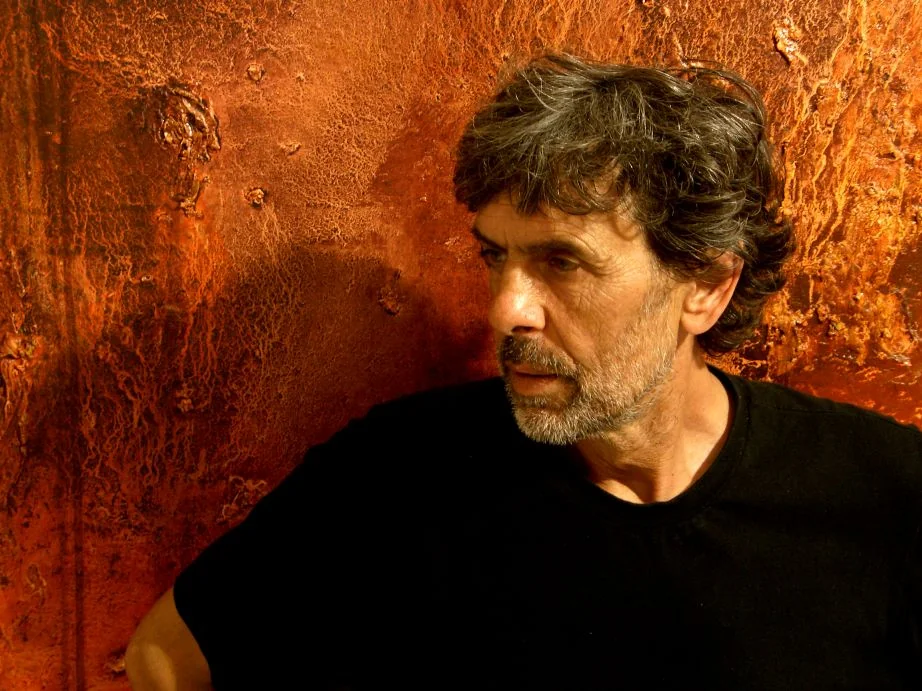
Image from Wikipedia
Image from Wikipedia
Peter Casagrande – Large-scale Painting Between Space, Color, and Artistic Intensity
A German Painter with Distinctive Presence
Peter Casagrande, born on February 23, 1946, in Weilheim in Upper Bavaria, is considered one of the independent positions in contemporary German painting. His artistic career is closely linked to the educational environment in Munich and Berlin, the experimental spirit of the 1970s, and a consistent engagement with space, color, and image structure. Today he lives and works in Maitenbeth, in the Allgäu region, and in Genoa – places that visibly reflect his international ties as well as his roots in Southern Germany. ([de.wikipedia.org](https://de.wikipedia.org/wiki/Peter_Casagrande?utm_source=openai))
Biography: From Letter Painter to Free Image Space
Casagrande's path into art did not begin in an academic ivory tower, but with a craft foundation: From 1960 to 1963, he completed an apprenticeship as a letter painter. This early training explains the confidence he exhibits in working with line, area, and design order, which later becomes so evident in his large-scale works. The craftsmanship never remained just a preliminary stage for him; rather, it developed into a fundamental part of his artistic identity. ([peter-casagrande.de](https://www.peter-casagrande.de/biografie.html?utm_source=openai))
His academic training initially brought him to the Academy of Fine Arts in Munich from 1970 to 1972, where he studied under Rudi Tröger, and subsequently to the University of Fine Arts in Berlin from 1972 to 1975. Between 1979 and 1980, he returned once again to the Munich academy. This combination of Munich's color sensitivity, Berlin's openness, and his own design instinct shaped a painter who does not react to fashions but develops an independent vocabulary. ([peter-casagrande.de](https://www.peter-casagrande.de/biografie.html?utm_source=openai))
In 1979, he founded the artist collective "Maitenbeth," an important step towards collective artistic practice and regional anchoring. In the same year, he received a scholarship from the City of Munich as well as the State Award for Promotion from the Free State of Bavaria. Such accolades not only mark recognition but also an early vote of confidence in a painting that already showcased formal consistency and independence at that time. ([peter-casagrande.de](https://www.peter-casagrande.de/biografie.html?utm_source=openai))
Exhibitions, Presence, and Institutional Recognition
Casagrande's exhibition history is broad and continuous. As early as 1980, he showed works at the Drazek Art Gallery in Munich, followed by the Art Salon at the House of Art in 1981. Since the early 1980s, his name has regularly appeared in regional and national exhibition contexts, including in Rosenheim, Wasserburg, Haidhausen, and Munich. This continuity signifies an artist whose work has not grown episodically but rather over decades. ([peter-casagrande.de](https://www.peter-casagrande.de/biografie.html?utm_source=openai))
Especially noteworthy is his presence at international art fairs and markets since 1986, including Art Basel, Art Cologne, ARCO Madrid, and Art Frankfurt. In addition, there are catalogues, exhibition projects, and collections in Germany, France, and Italy. His presence in institutional and private collections, such as the Lenbachhaus in Munich, the Municipal Gallery in Rosenheim, the Museo Diotti in Casalmaggiore, or the Fondazione Reverberi in Genoa, underscores the documented esteem of his painting. ([peter-casagrande.de](https://www.peter-casagrande.de/biografie.html?utm_source=openai))
Artistic Development: Space as a Thematic Element
In the available sources, Casagrande's painting is described as art that strips space of objectivity and allows it to emerge anew through color and layering of painting structures. This is a central key to his work: not the image itself, but the organization of the picture is at the core. His canvases appear as precisely developed spaces of layering, condensing, and open area, where color becomes an architectural force. ([de.wikipedia.org](https://de.wikipedia.org/wiki/Peter_Casagrande?utm_source=openai))
The large format plays a decisive role in this. Casagrande does not work within the logic of small panel paintings but rather in that of physical experience: The viewer steps not just in front of a picture but into a space of color and structure. The painting gesture remains controlled, but never sterile; it carries movement, energy, and a distinct pleasure in expansion. ([peter-casagrande.de](https://www.peter-casagrande.de/biografie.html?utm_source=openai))
A text on his website even suggests that the name Casagrande is a fitting reference to the way the painter conquers space. This interpretation aligns with his work, which does not rely on quick effects but rather on depth, structure, and the interplay of different levels. In this sense, his painting appears simultaneously reflective and sensual, conceptual and material. ([peter-casagrande.de](https://www.peter-casagrande.de/texte.html?utm_source=openai))
Series of Works and Documented Projects
His official website features selection series such as "2000–2024," which make the long breath of his work visible. Here, large-scale oil paintings dominate, showcasing a clear artistic signature in their color and materiality. The continuity over more than two decades proves that Casagrande's work consists less of isolated highlights and more of a consistently developed visual language. ([peter-casagrande.de](https://www.peter-casagrande.de/auswahl_2000_2024.html?utm_source=openai))
The documentation of his exhibitions and catalogues also reflects a stable work history: from "Peter Casagrande Works 1981–1985" to "The Large Format" and later publications and projects in Paris, Rosenheim, and Solingen. Such milestones are important as they not only document individual pictures but also an ongoing painterly attitude. Thus, Casagrande remains an artist whose development can be traced in understandable stages. ([peter-casagrande.de](https://www.peter-casagrande.de/biografie.html?utm_source=openai))
Reception and Classification in the Art Landscape
The preserved press texts and exhibition notes show a painter who does not stand in the noisy center of the art scene, but rather convinces through perseverance, scale, and presence. Reports about his works highlight the fascination of the creative process: How something pictorial emerges from swirls, plastering movements, and application of color is just as important to Casagrande's work as the final result. This processual dimension makes his painting particularly interesting from an art historical perspective. ([ovb-online.de](https://www.ovb-online.de/rosenheim/wasserburg/bis-pinsel-hand-faellt-peter-casagrande-grossformat-13273336.html?utm_source=openai))
Furthermore, there is institutional recognition through exhibitions, collections, and catalogues. When works are anchored in state and municipal collections and in reputable institutions such as the Lenbachhaus or the Municipal Gallery in Rosenheim, authority emerges not through self-promotion but through documented presence. Casagrande is thus a painter whose significance unfolds from the work and its reception. ([peter-casagrande.de](https://www.peter-casagrande.de/biografie.html?utm_source=openai))
Current Activities and Projects
The official website references ongoing activity through entries for the Open Studio Days in Maitenbeth. Corresponding updates for 2020, 2022, 2024, and 2025 are documented, announcing new paintings, ceramic painting, and works on paper, as well as describing the open studio operation. This indicates that Casagrande's artistic work is not a closed chapter but a vibrant practice with ongoing presence. ([peter-casagrande.de](https://www.peter-casagrande.de/nachrichtenleser/offene_ateliertage_maitenbeth_2022.html?utm_source=openai))
Even though Peter Casagrande does not have a discography in the musical sense as a painter, his work possesses a clear catalogue character: exhibitions, catalogues, groups of works, and documented series form the aesthetic counterpart to the discography of a musician. It is this long-term artistic development that makes him intriguing for art lovers seeking a language of painting that remains consistent over decades. ([peter-casagrande.de](https://www.peter-casagrande.de/biografie.html?utm_source=openai))
Cultural Influence: Regional Roots, International Impact
Peter Casagrande connects Southern Germany, Italy, and the European exhibition space into a cultural geography that adds additional depth to his work. Maitenbeth, Munich, Berlin, and Genoa mark not just mere life stations, but different resonance spaces of a painting that benefits from changes of location and artistic concentration. In this combination of regional proximity and international visibility lies an important part of his impact. ([peter-casagrande.de](https://www.peter-casagrande.de/biografie.html?utm_source=openai))
His works exemplify an art that slows down perception and understands space not as a background but as a theme. Particularly in a time of rapid visual stimuli, this attitude unfolds cultural relevance: Casagrande's pictures demand attention, patience, and an open perspective on painting as a form of thought. This renders his work significant not only from an art historical point of view but also in a contemporary context. ([peter-casagrande.de](https://www.peter-casagrande.de/texte.html?utm_source=openai))
Conclusion: A Painter of Substance and Open Image Space
Peter Casagrande is an artist whose significance arises from consistency, craft heritage, and a strong painting idea. His large-scale works, his education in Munich and Berlin, the founding of the artist collective Maitenbeth, and the documented exhibition history illustrate a remarkable artistic development. Those interested in painting as spatial art will find here a position of rare clarity and endurance. ([peter-casagrande.de](https://www.peter-casagrande.de/biografie.html?utm_source=openai))
Casagrande remains intriguing because he does not rely on spectacular effects but rather on the depth of the image, on color as structure, and on the experience of space. It is precisely in this quality that his sustainable strength lies. Those who experience his works live do not encounter mere pictures but a concentrated, multifaceted artistic cosmos. ([peter-casagrande.de](https://www.peter-casagrande.de/texte.html?utm_source=openai))
Official Channels of Peter Casagrande:
- Instagram: No official profile found
- Facebook: No official profile found
- YouTube: No official profile found
- Spotify: No official profile found
- TikTok: No official profile found