
Nikolaj Szeps-Znaider
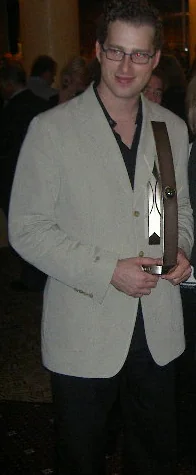
Image from Wikipedia
Image from Wikipedia
Nikolaj Szeps-Znaider – Violin Virtuoso, Conductor, and Sound Architect Between Tradition and Modernity
An artist who infuses the extensive repertoire with personal tension
Nikolaj Szeps-Znaider, born on July 5, 1975, in Copenhagen, is among the most prominent Danish musicians of his generation. As a violin virtuoso and conductor, he combines technical mastery with an artistic approach that does not merely treat the classical repertoire as a museum piece but instead interrogates it with vitality. His career exemplifies a rare dual competence: he shapes music not only as a soloist but also as a leader of large orchestras. ([de.wikipedia.org](https://de.wikipedia.org/wiki/Nikolaj_Szeps-Znaider))
His path became evident early on as remarkably consistent. His education included studies with Boris Kuschnir in Vienna and previously at the Juilliard School with Dorothy DeLay; he won the Concours Reine Elisabeth in Brussels in 1997, which marked the substantial launch of his international solo career. Today, he is regarded as an artist who encapsulates virtuosity, stylistic clarity, and interpretative authority in a single musical language. ([de.wikipedia.org](https://de.wikipedia.org/wiki/Nikolaj_Szeps-Znaider))
Early Years and Breakthrough as a Violinist
The biography of Nikolaj Szeps-Znaider is closely tied to the classical violin school of the 20th century. After studying in New York and Vienna, he developed in an environment influenced by figures such as Itzhak Perlman, Shlomo Mintz, and Gil Shaham. Winning the Carl Nielsen Competition in 1992 and placing third at the International Jean Sibelius Violin Competition in 1995 mark early milestones in a career founded on precision, discipline, and stylistic maturity. ([de.wikipedia.org](https://de.wikipedia.org/wiki/Nikolaj_Szeps-Znaider))
The actual international breakthrough occurred in 1997 in Brussels. From there, engagements led him to the Vienna Philharmonic, the Gewandhaus Orchestra, the New York Philharmonic, and many other top orchestras. His artistic development has never remained linear; rather, it has always been characterized by expansion—from a celebrated soloist to a musician who masters not only the orchestral overall form but also the solo line. ([concerti.de](https://www.concerti.de/kuenstler/nikolaj-znaider/))
The Step to the Conductor's Podium
The transition to a second career as a conductor arose not as a mere supplemental field but as a genuine necessity. Szeps-Znaider himself described leading an ensemble as an inner obligation, and therein lies the unique tension of his career: he thinks about music from the perspective of sound, but also in terms of structure, balance, and dramaturgy. This dual perspective makes him an interpreter who pays attention to both the micro-details of the solo voice and the architecture of the large score. ([cso.org](https://cso.org/experience/article/15444/nikolaj-szeps-znaider-masters-the-delicate-sk))
His work at the podium has led him to opera productions such as Mozart's "The Magic Flute" and Strauss' "Der Rosenkavalier" at the Semper Opera Dresden, as well as performances with the Royal Danish Opera, the Bavarian State Opera, and the Zurich Opera. His close ties with major American and European orchestras, including the Chicago Symphony Orchestra, demonstrate that he does not appear as an outside guest but as an artist who builds trust over long periods. ([enticottmusicmanagement.com](https://www.enticottmusicmanagement.com/project/nikolaj-znaider/))
Discography, Recordings, and Interpretative Style
Nikolaj Szeps-Znaider's discography reflects his status as a reference interpreter of the core repertoire. Key recordings include the Nielsen Concerto with Alan Gilbert and the New York Philharmonic, Elgar's Violin Concerto with Sir Colin Davis and the Saxon State Orchestra Dresden, as well as award-winning recordings of the Violin Concertos by Brahms and Korngold with the Vienna Philharmonic under Valery Gergiev. Additional collaborations feature Beethoven and Mendelssohn with Zubin Mehta and the Israel Philharmonic, as well as Prokofiev and Glazunov with Mariss Jansons and the Bavarian Radio Symphony Orchestra. ([dso-berlin.de](https://www.dso-berlin.de/de/orchester/personen/biografien/nikolaj-szeps-znaider/))
Particularly notable is the range between the classical canon and differentiated sound exploration. His collaboration with the London Symphony Orchestra on a complete recording of Mozart's Violin Concertos, where he acts as both conductor and soloist, underscores this dual role. Furthermore, the recording of Brahms' complete works for violin and piano with Yefim Bronfman highlights an artistic profile that places great importance on dialogue, chamber music, and an awareness of form. ([dso-berlin.de](https://www.dso-berlin.de/de/orchester/personen/biografien/nikolaj-szeps-znaider/))
Style, Tone Culture, and Musical Development
Critics consistently describe Szeps-Znaider as a musician whose playing is defined by noble tone, refinement, and structural penetration. The press emphasizes that his art flourishes especially when he concentrates fully on the music and blocks out all distractions. This observation aligns with a style that does not rely on effects but rather on substance, tonal discipline, and large arcs of tension. ([de.wikipedia.org](https://de.wikipedia.org/wiki/Nikolaj_Szeps-Znaider))
His interpretations are characterized by a blend of classical elegance and dramatic energy. Grounded in the tradition of great European violinists, he remains a contemporary artist who does not merely reproduce repertoire but illuminates it. This is particularly evident in works by Brahms, Elgar, Beethoven, Mendelssohn, and Prokofiev, revealing how his musical development rests on maturity, control, and inner flexibility. ([dso-berlin.de](https://www.dso-berlin.de/de/orchester/personen/biografien/nikolaj-szeps-znaider/))
Cultural Influence and Current Activities
Since September 2020, Szeps-Znaider has been the Music Director of the Orchestre national de Lyon; his tenure has since been extended through the 2026/27 season. This position marks an important chapter in his artistic biography, as it further sharpens his profile as a shaping orchestrator. Simultaneously, he continues to be in demand as a soloist and works on projects that make his dual identity as violinist and conductor visible. ([de.wikipedia.org](https://de.wikipedia.org/wiki/Nikolaj_Szeps-Znaider))
His current and recent projects include the ongoing collaboration with the London Symphony Orchestra, with whom he is recording all of Mozart's Violin Concertos. Additionally, he regularly performs with the Chicago Symphony Orchestra and partakes in an extensive European recital tour with Daniil Trifonov. His presence on major stages not only shapes classical concert formats with inner urgency but also proves culturally impactful. ([dso-berlin.de](https://www.dso-berlin.de/de/orchester/personen/biografien/nikolaj-szeps-znaider/))
Awards, Reputation, and Recognition
The recognition of Nikolaj Szeps-Znaider is evident not only in his international visibility but also in concrete accolades. In addition to his award in Brussels and early competition success in Helsinki, he received the Luitpold Prize at the Kissinger Summer in 1999 and an Echo Klassik in 2004. Such honors document not only technical excellence but also a continuous presence at the center of European musical life. ([de.wikipedia.org](https://de.wikipedia.org/wiki/Nikolaj_Szeps-Znaider))
Institutions such as the Festspielhaus Baden-Baden, the Chicago Symphony Orchestra, the German orchestral and concert scene in Berlin, and international management pages describe him as an exceptionally versatile musician. This authority in the industry stems from his stage presence, his understanding of repertoire, and his ability to shape both concert evenings and opera productions with significant musical identity. ([festspielhaus.de](https://www.festspielhaus.de/kuenstler/nikolaj-szeps-znaider/))
Conclusion: A Musician of Extraordinary Range
Nikolaj Szeps-Znaider captivates because he merges two musical existences into a credible unity. As a violinist, he possesses a sense of style, tone culture, and technical authority; as a conductor, he thinks broadly, structurally, and with a clear awareness of dramatic development. Those who experience him live encounter not a routine virtuoso but an artist who invigorates the classical repertoire with tension, seriousness, and personality. ([cso.org](https://cso.org/experience/article/15444/nikolaj-szeps-znaider-masters-the-delicate-sk))
It is this blend of soloistic radiance and conducting foresight that makes his career exciting. Szeps-Znaider embodies lived musical versatility, a commitment to European traditions without stagnation, and interpretations that resonate long after the last note. Anyone who has the opportunity to hear him on stage should seize it: his concerts are an experience of depth, precision, and artistic presence. ([dso-berlin.de](https://www.dso-berlin.de/de/orchester/personen/biografien/nikolaj-szeps-znaider/))
Official Channels of Nikolaj Szeps-Znaider:
- Instagram: No official profile found
- Facebook: No official profile found
- YouTube: No official profile found
- Spotify: No official profile found
- TikTok: No official profile found
Sources:
- Wikipedia – Nikolaj Szeps-Znaider
- German Symphony Orchestra Berlin – Biography of Nikolaj Szeps-Znaider
- Chicago Symphony Orchestra – Nikolaj Szeps-Znaider masters the delicate skill of thriving in two careers
- concerti.de – Nikolaj Szeps-Znaider: Concerts, Articles, Reviews & Dates
- Festspielhaus Baden-Baden – Nikolaj Szeps-Znaider
- Enticott Music Management – Nikolaj Szeps-Znaider