
Stephan Holstein
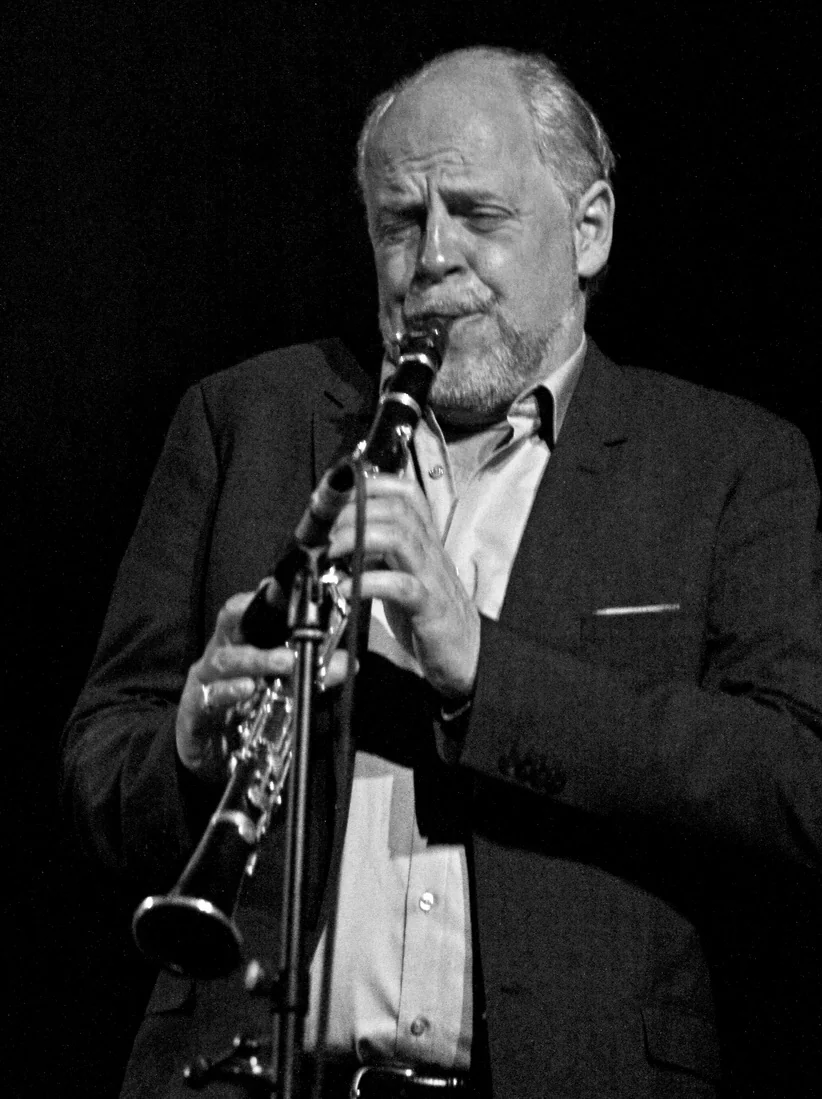
Image from Wikipedia
Image from Wikipedia
Stephan Holstein – Jazz Clarinet with Lyrical Precision and Swinging Elegance
A German jazz musician with a fine tone, stylistic breadth, and clear artistic signature
Stephan Holstein, born in 1963 in Tübingen, is one of the prominent German jazz musicians on clarinet and saxophone. His music career began early: he started playing the clarinet at the age of eleven and took lessons from Karl-Heinz Hahn, the solo clarinetist of the Munich Philharmonic. This classical foundation combined with an open jazz attitude later made him a musician with an elegant tone, melodic imagination, and confident stage presence. ([de.wikipedia.org](https://de.wikipedia.org/wiki/Stephan_Holstein?utm_source=openai))
Holstein's name stands for a jazz that draws strength from tradition while remaining flexible. He moves between clarinet and saxophone playing, between chamber music transparency and swinging directness, between repertoire maintenance and spontaneous improvisation. In the German jazz scene, he has established himself as a musician with a distinctive voice, whose artistic development over decades is marked by stylistic discipline and tonal curiosity. ([de.wikipedia.org](https://de.wikipedia.org/wiki/Stephan_Holstein?utm_source=openai))
Early Influences: Classical School, Jazz Passion, and the Path to a Personal Language
Stephan Holstein's musical socialization shows a rare combination of solid training and early-developed jazz sensibility. His lessons with Karl-Heinz Hahn laid the foundation for a clean articulation, nuanced phrasing, and controlled tone production – qualities that would later shape his improvisations. The clarinet in jazz requires a sensitive balance of airflow, phrasing, and harmonic awareness; Holstein shaped this into a language that feels elegant and unvarnished. ([de.wikipedia.org](https://de.wikipedia.org/wiki/Stephan_Holstein?utm_source=openai))
His artistic journey led him into an environment where jazz is understood not merely as a genre but as a living practice. Holstein played with numerous bands and projects, gathered stylistic experiences, and developed playing that is never reduced to mere virtuosity. The quality of his tone and the melodic clarity of his playing make him a musician capable of conveying complex musical structures with ease. ([de.wikipedia.org](https://de.wikipedia.org/wiki/Stephan_Holstein?utm_source=openai))
Trios, Quintet, and Encounters: Chamber Jazz as the Heart of His Career
Holstein's work in a trio with Tizian Jost on piano and Thomas Stabenow on bass is particularly formative. This configuration embodies an open, communicative form of jazz where arrangement, dynamics, and mutual listening hold equal importance. Complemented by Michael Keul on drums and Wolfgang Schlüter on vibraphone, a quintet takes shape that expands Holstein's sound aesthetic with additional colors and emphasizes the chamber music aspect of his playing. ([de.wikipedia.org](https://de.wikipedia.org/wiki/Stephan_Holstein?utm_source=openai))
In collaboration with Tizian Jost and Thomas Stabenow, Holstein's strength is particularly evident: he thinks in dialogue, responds to nuances, and uses the clarinet as a richly expressive, singing instrument. The album Kaleidoscope documents this attitude with twelve pieces, including original titles and arrangements from the classical repertoire; RONDO describes the program as seriously cheerful and characterized by stylistic sovereignty. This also suggests how much Holstein explores the tension between tradition and personal interpretation. ([music.amazon.com](https://music.amazon.com/albums/B079SVZWNS?utm_source=openai))
Discography and Recording Work: From Sessions to Form-Conscious Productions
The discographer Tom Lord lists Holstein's involvement in eight recording sessions between 1992 and 2001. This includes work with the Chamber Orchestra Schloss Werneck & The Jazz Age Quintet led by Rainer Glas, with Helmut Nieberle & Cordes Sauvages, as well as with the Uli Fiedler Trio; further recordings were made with Klaus Weiss, Al Jones, Christian Willisohn, Wolfgang Lackerschmid, and Ludwig Seuss. This lineup shows a musician who reliably contributes sound, style, and ensemble thinking across various settings. ([de.wikipedia.org](https://de.wikipedia.org/wiki/Stephan_Holstein?utm_source=openai))
Prominent entries in his discography include Jazz Clarinet and Jazz Clarinet 2, both released in 2020 and documented on streaming platforms; also, a previous trio work, Kaleidoscope, remains accessible in digital format. In 2026, new collaborative releases with Thomas Stabenow, Nina Michelle, and Stefan Noelle are set to appear, underscoring Holstein's continued presence in current jazz production. His discography therefore reads not merely as a collection of titles but as a continuous documentation of encounters, repertoire, and stylistic awareness. ([music.apple.com](https://music.apple.com/jp/album/jazz-clarinet/1535014801?utm_source=openai))
Stylistics: Swing, Melody, and a Warm, Controlled Clarinet Sound
Holstein's playing is described in concert announcements as poetic, swinging, and melody-oriented; blues and improvisation play a central role. These characteristics align with a jazz understanding that never seems academic but remains communicative in the best sense. For Holstein, the clarinet is not a historical relic but a vibrant, flexible means of expression with timeless brilliance. ([jazzclub-abensberg.de](https://jazzclub-abensberg.de/index.php/termine?catid=8&id=149&view=article&utm_source=openai))
His interpretations move with a sure sense between tradition and personal profile. Particularly in his work with standards and classical-inspired formats, there is a strong affinity for melody, form, and tonal balance. The Augsburg newspaper described a Holstein quintet concert as initially restrained but later as “happy music” – suggesting that his artistry often lives in the tension between restraint and released energy. ([daz-augsburg.de](https://www.daz-augsburg.de/gepflegter-goodman-swing/?utm_source=openai))
Reception, Recognition, and Cultural Influence
In 1995, Stephan Holstein received the Cultural Promotion Award from the State of Bavaria, an honor that underscores his status as a serious and deserving jazz artist. Such accolades in jazz are not merely decorative; they typically mark an artistic signature that is perceived beyond local scenes. Holstein thus represents a generation of German jazz musicians who connect the European sound of the genre with their own, regionally rooted identity. ([de.wikipedia.org](https://de.wikipedia.org/wiki/Stephan_Holstein?utm_source=openai))
His cultural influence is particularly evident in the consistency of his musical model: ensemble work, stylistic openness, and the deliberate cultivation of a melodic jazz idiom. Concert programs, festival appearances, and joint projects with renowned collaborators like Tizian Jost, Thomas Stabenow, or Wolfgang Schlüter make clear that Holstein does not aim for short-term effects but for substance and recognizability. This attitude lends weight and credibility to his music career. ([de.wikipedia.org](https://de.wikipedia.org/wiki/Stephan_Holstein?utm_source=openai))
Current Activities and Lively Presence
Stephan Holstein remains present in recent concert announcements. Various performances with Frank Muschalle and a jazz festival appearance in Spiekeroog are scheduled for 2026; there are also indications of programs with Jörg Widmoser and the continuation of his work in trio and quartet settings. This continuity shows an artist whose live presence is not a resonance from the past but part of an active present. ([frankmuschalle.de](https://www.frankmuschalle.de/?utm_source=openai))
The current releases and concerts confirm that Holstein does not have to defend his place in the jazz scene but continually redefines it from his musical stance. Particularly in collaboration with experienced instrumentalists, there emerges that tension that breathes life into jazz: precision meets spontaneity, tradition meets the present, sound meets character. For listeners who appreciate expressive clarinet, swinging melodies, and honest ensemble artistry, Stephan Holstein remains an exciting address. ([music.apple.com](https://music.apple.com/us/album/dead-end-street-single/1876585028?utm_source=openai))
Conclusion: A Musician with Attitude, Tone, and Depth
Stephan Holstein impresses as a jazz musician because he brings technique, a sense of style, and personal signature into a coherent form. His artistic development speaks of training, experience, and long-standing ensemble practice, but also of an attitude that sees music as a living dialogue. For those seeking clarinet jazz with warmth, control, and swinging elegance, here is a distinctive voice with substance. ([de.wikipedia.org](https://de.wikipedia.org/wiki/Stephan_Holstein?utm_source=openai))
Especially in live performances, Holstein reveals the qualities that make his career so remarkable: sonic presence, interaction, and a direct connection to the audience. His concerts represent jazz that does not need to be loud to leave a lasting impact. Experiencing him on stage means hearing musical maturity in real-time. ([daz-augsburg.de](https://www.daz-augsburg.de/gepflegter-goodman-swing/?utm_source=openai))
Official Channels of Stephan Holstein:
- Instagram: no official profile found
- Facebook: no official profile found
- YouTube: no official profile found
- Spotify: no official profile found
- TikTok: no official profile found
Sources:
- Wikipedia – Stephan Holstein
- RONDO – Kaleidoscope – Stephan Holstein
- Augsburger Zeitung – Gepflegter Goodman-Swing
- Spiekeroog Jazz-Festival Program 2026
- Frank Muschalle – Official Website
- Apple Music – Jazz Clarinet
- Apple Music – Jazz Clarinet 2
- Apple Music – Dead End Street - Single
- Amazon Music – Kaleidoscope
- Thomas Stabenow – Jazz Clarinet
- Wikipedia: Image and text source
Upcoming Events
JazzSummerEvening: Johannes Ochsenbauer Trio & Stephan Holstein
Jazz under the open sky in Neu-Ulm: Johannes Ochsenbauer Trio & Stephan Holstein perform at Caponniere 4 with free entry. An evening full of swing and fine improvisation. #Jazz
Jazz Summer Evening: Johannes Ochsenbauer Trio & Stephan Holstein
Enjoy jazz under the open sky with the Johannes Ochsenbauer Trio and Stephan Holstein.