
Günther Hasinger
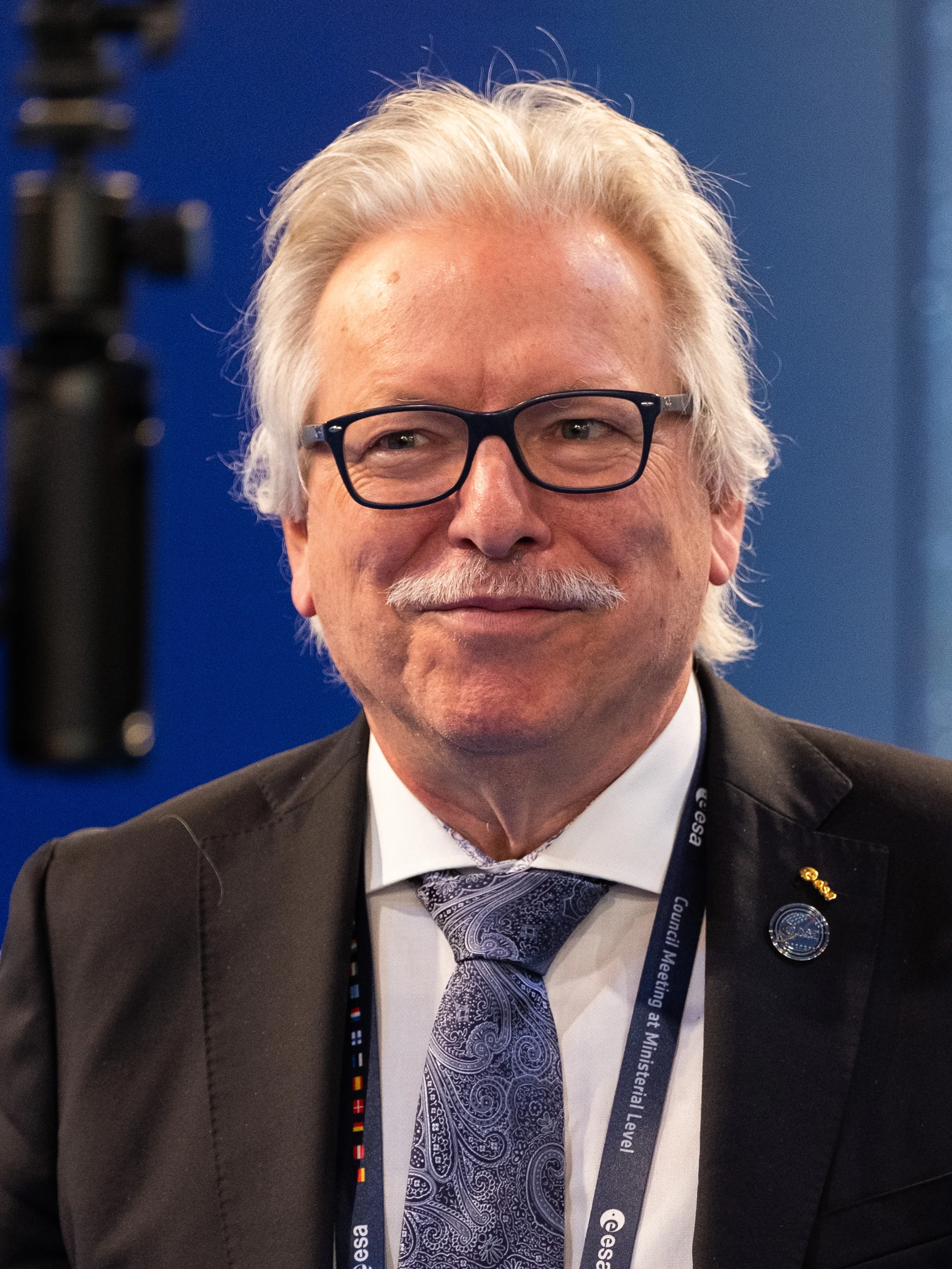
Image from Wikipedia
Image from Wikipedia
Günther Hasinger – The Astrophysicist Who Measures the Vastness of the Cosmos with Scientific Precision
A Life Between Stars, Research, and International Science Policy
Günther Gustav Hasinger, born on April 28, 1954, in Oberammergau, is one of the defining German astrophysicists of his generation. His journey spans from LMU Munich to the Max Planck Institute for Extraterrestrial Physics, reaching top positions in European and international research institutions. Today, as the designated founding director of the German Center for Astrophysics in Görlitz, he plays a central role in the establishment of new scientific infrastructure in Germany. ([esa.int](https://www.esa.int/Space_in_Member_States/Germany/Guenther_Hasinger_zum_ESA-Direktor_fuer_Wissenschaft_ernannt))
Anyone reading Hasinger's biography will quickly realize: the focus is not on a classical stage artist, but on a researcher with exceptional charisma, whose public engagement is characterized by lectures, institute leadership, and scientific policy initiatives. His career combines X-ray astronomy, cosmology, fusion research, and the institutional development of research centers. This blend of scientific authority and communicative presence makes him a prominent figure in European astrophysics. ([mpg.de](https://www.mpg.de/guenther-hasinger))
Early Years and Academic Influence
Hasinger studied physics at Ludwig Maximilian University of Munich and earned his doctorate in astronomy in 1984 based on his research at the Max Planck Institute for Extraterrestrial Physics in Garching. Even during this phase, his profile as a researcher emerged, integrating theory, observation, and instrument practice. After research positions in the USA, he was appointed director at the Leibniz Institute for Astrophysics at the University of Potsdam in 1994; in 1995, he completed his habilitation at LMU Munich. ([esa.int](https://www.esa.int/Space_in_Member_States/Germany/Guenther_Hasinger_zum_ESA-Direktor_fuer_Wissenschaft_ernannt))
The scientific socialization in the environment of Max Planck research has had a lasting impact on his working methods. Notably, his early engagement with X-ray satellites, a highly precise observation technique that translates the invisible universe into measurable data, stands out. From the very beginning, Hasinger has been navigating a field where technology, analysis, and fundamental cosmic questions are inextricably linked. ([esa.int](https://www.esa.int/Space_in_Member_States/Germany/Guenther_Hasinger_zum_ESA-Direktor_fuer_Wissenschaft_ernannt))
The Path to International Top Research
In 2001, Hasinger became a scientific member and director of the X-ray and Gamma group at the Max Planck Institute for Extraterrestrial Physics. Three years later, he took on a honorary professorship at TU Munich. In 2008, he shifted from cosmology and X-ray astronomy to fusion research and became director at the Max Planck Institute for Plasma Physics before returning as director of the Institute for Astronomy at the University of Hawaii in 2011. ([esa.int](https://www.esa.int/Space_in_Member_States/Germany/Guenther_Hasinger_zum_ESA-Direktor_fuer_Wissenschaft_ernannt))
These transitions reveal an unusual scientific breadth. Hasinger did not confine himself to a single subfield but interconnected astrophysics, large instruments, and research management at an international level. His career exemplifies a generation of scientists who do not produce fundamental insights in isolation but realize them within networks, missions, and institutions. ([esa.int](https://www.esa.int/Space_in_Member_States/Germany/Guenther_Hasinger_zum_ESA-Direktor_fuer_Wissenschaft_ernannt))
ESA, Space Research, and Scientific Authority
In 2017, the European Space Agency (ESA) appointed him as Director of Science; in 2018, he took up this role and assumed leadership of ESAC in Madrid. The ESA emphasized that Hasinger is one of the leading scientists worldwide in the field of X-ray astronomy, researching the formation and development of distant galaxies as well as the role of black holes. His accolades include the Leibniz Prize from the DFG and the COSPAR Prize for outstanding contributions to space research. ([esa.int](https://www.esa.int/Space_in_Member_States/Germany/Guenther_Hasinger_zum_ESA-Direktor_fuer_Wissenschaft_ernannt))
In his role at ESA, he shaped key scientific decisions and communicated missions of international reach. For instance, he commented on the selection of Envision as a Venus mission and the selection of Comet Interceptor as ESA's quick mission. This public and clearly articulated communication strengthens his profile not only as a scientist but also as an authority in the European aerospace and astrophysics landscape. ([esa.int](https://www.esa.int/Science_Exploration/Space_Science/ESA_selects_revolutionary_Venus_mission_Envision?utm_source=openai))
Current Tasks and New Research Infrastructure
Currently, Hasinger stands at the center of the German Center for Astrophysics. A statement from the DZA in January 2026 describes him as the first professor appointed by TU Dresden to the DZA gGmbH; he is said to be appointed as a professor of astrophysics at TU Dresden and to act as the scientific managing director of the DZA. Previously, the DZA has been described as a strategically important new research center for the Lausitz region. ([de.linkedin.com](https://de.linkedin.com/posts/deutscheszentrumastrophysik_g%C3%BCnther-hasinger-ist-der-erste-von-der-activity-7419753865530462209-AGOv))
This development underscores the institutional significance of his work. Hasinger represents not only research outcomes but also the establishment of long-term structures to strengthen German astrophysics in international competition. This combination of scientific excellence with regional and structural impact is one of his greatest achievements: linking scientific excellence with long-term consequences. ([mpifr-bonn.mpg.de](https://www.mpifr-bonn.mpg.de/pressemeldungen/2022/12))
Research Focus: X-ray Astronomy, Galaxies, and Black Holes
The ESA describes Hasinger’s scientific focus as the exploration of the formation and development of distant galaxies and the role of black holes as the nuclei of galaxies. The Max Planck portrait further emphasizes how influential his work on the ROSAT project was, where he operated at the interface between hardware and software, developed algorithms for data analysis, and led the deep survey team. This is the kind of research where instrumental precision and cosmological perspective meet head-on. ([esa.int](https://www.esa.int/Space_in_Member_States/Germany/Guenther_Hasinger_zum_ESA-Direktor_fuer_Wissenschaft_ernannt))
Particularly notable is his work on the Crab Nebula and other sources of high-energy radiation. The research description highlights how closely Hasinger’s work is linked with the major questions of modern astrophysics: How do compact objects form? How can distant structures in the universe be reconstructed from weak signals? Such themes continue to define his scientific signature today. ([mpg.de](https://www.mpg.de/guenther-hasinger))
Style, Communication, and Public Presence
Hasinger's public impact derives not only from academic publications but also from his ability to communicate complex content in an understandable and lively manner. A 2009 MPIK lecture highlighted him as a "brilliant astrophysicist known for his outstanding lectures." This demonstrates that his scientific authority extends beyond specialist circles and gains weight in the dissemination of knowledge. ([mpi-hd.mpg.de](https://www.mpi-hd.mpg.de/mpi/de/nachrichten/nachricht/das-schicksal-des-universums-vortrag-von-guenther-hasinger?utm_source=openai))
The MPG portrait also depicts him as a personality with an unusual biography: he initially wanted to study medicine, later became fascinated by technology, and ultimately found his path in astronomy. This combination of technical curiosity, intellectual discipline, and public engagement makes him a scientist whose career is not just about data and positions but follows a clear, lifelong developmental line. ([mpg.de](https://www.mpg.de/guenther-hasinger))
Cultural Influence and Scientific Legacy
Hasinger's influence is reflected in the international visibility of German astrophysics. His work on major projects, his leadership roles in Potsdam, Garching, Hawaii, and Madrid, as well as his role in establishing the DZA mark a career with lasting institutional impact. He is also a member of the Berlin-Brandenburg Academy of Sciences, the Leopoldina, and an external member of the Austrian Academy of Sciences. ([esa.int](https://www.esa.int/Space_in_Member_States/Germany/Guenther_Hasinger_zum_ESA-Direktor_fuer_Wissenschaft_ernannt))
He also leaves a mark in research communication. The MPG portrait recalls that he grew up in an environment of music, technology, and science, and the metaphors in his work often show a rare vividness. Thus, a specialist transcends into a figure who shapes the cultural sphere of science: not as a pop star, but as a creator of knowledge, institutions, and public debate. ([mpg.de](https://www.mpg.de/guenther-hasinger))
Conclusion: Why Günther Hasinger Remains So Fascinating
Günther Hasinger captivates because his career represents the full breadth of modern astrophysics: research, instrumentation, teaching, international collaboration, and scientific policy responsibility. He embodies a form of excellence that does not make loud entrances but exerts a lasting impact. Those interested in astrophysics, European space exploration, and the future of research infrastructure find in his career an outstanding example. ([esa.int](https://www.esa.int/Space_in_Member_States/Germany/Guenther_Hasinger_zum_ESA-Direktor_fuer_Wissenschaft_ernannt))
Especially live in lectures, discussions, or public science formats, Hasinger's work reveals its full strength: complex research becomes an understandable glimpse into the universe. His life’s work shows how curiosity, discipline, and scientific responsibility lead to a career of international significance. ([mpi-hd.mpg.de](https://www.mpi-hd.mpg.de/mpi/de/nachrichten/nachricht/das-schicksal-des-universums-vortrag-von-guenther-hasinger?utm_source=openai))
Official Channels of Günther Hasinger:
- Instagram: No official profile found
- Facebook: No official profile found
- YouTube: No official profile found
- Spotify: No official profile found
- TikTok: No official profile found
Sources:
- Max Planck Society – Günther Hasinger Portrait
- European Space Agency – Günther Hasinger Appointed ESA Director of Science
- European Space Agency – ESA Selects Revolutionary Venus Mission Envision
- European Space Agency – Günther Hasinger Appointed ESA Director of Science
- European Space Agency Science & Technology – ESA's New Mission to Intercept a Comet
- Max Planck Institute for Radio Astronomy – A Gain for Science and the Lausitz Region
- German Center for Astrophysics – LinkedIn Post about Günther Hasinger
- Wikipedia – Günther Hasinger
Upcoming Events
Black Holes and Dark Matter