How Rosenheim Becomes a Smart City – Digitization
How Rosenheim Becomes a Smart City: Vision, Data, and Everyday Life (Outlook to 2035)
In the coming years, administrative processes in Rosenheim could become increasingly digital, buses and traffic lights could respond more data-driven in the future, and waste collection trips could take place exactly when they are really needed. This article summarizes how a Smart City development in Rosenheim could feel by 2035 – and which framework conditions (data protection, IT security, standards) will be decisive for this.
Note for classification: The text describes only possible and planned developments (goals, typical measures, expected effects). Whether, when, and to what extent individual projects are implemented depends on decisions, financing, tenders, technological maturity, and legal requirements.
Digital Vision 2035: Guiding Principle for a Connected City
A Smart City rarely emerges from a single project, but from a long-term digital strategy with clear goals, priorities, and measurable milestones. For Rosenheim, such a roadmap would be particularly effective by 2035 if digitization is understood as a means for quality of life, sustainability, and reliable public services – not as an end in itself.
Typical target areas that a Smart City strategy can cover by 2035 include:
- Digital Administration: More services fully online, with understandable processes and low-barrier access.
- Connected Infrastructure: Data foundations for traffic, waste management, environment, and properties – with clear responsibilities.
- Sustainability & Climate Protection: Use resources more efficiently, reduce emissions, control municipal facilities more intelligently.
- Digital Participation: Design offerings so that people with little digital competence or without current devices are not excluded.
- Innovation & Cooperation: Collaboration with universities, business, and civil society to test solutions in practice.
- Secure Digital Services: IT security and data protection as a basic prerequisite for trust.
For legally compliant, user-friendly handling of digital administrative services, standards and identity solutions will likely play a central role – especially the Online Access Act (OZG) as a framework for digital administrative services in Germany, as well as European requirements such as eIDAS for electronic identification and trust services. In practice, this means: secure login, traceable delivery, reliable digital signatures, and a protection concept that meets the state of the art.
To ensure progress remains verifiable, Smart City programs are usually managed with key performance indicators (KPIs). It makes sense to use not only quantitative targets (e.g., how many services are online), but also quality indicators (e.g., processing times, user satisfaction, accessibility, reliability).
Digital Administration & Cloud-First: The Town Hall in Transition
A large part of the Smart City impact will likely arise where citizens feel it directly: with applications, proofs, appointment scheduling, and communication with the city. This requires modernized IT processes, consistent data management, and secure access – often supported by cloud or hybrid cloud architectures.
If Rosenheim further expands a cloud-first or cloud-ready strategy, three points will be particularly important in the coming years:
- Digital Workplace: mobile working, collaborative document editing, secure video communication, and standardized device management.
- End-to-End Processes: from online application submission through internal processing to digital delivery of notices – with traceable status updates.
- Governance: clear roles (department, IT, data protection, information security), logging, authorization concepts, and regular risk analyses.
For trustworthiness, it will be crucial that information security is not "added on" afterwards, but planned as part of the architecture. In Germany, the recommendations and standards of the BSI provide guidance for this (e.g., IT Baseline Protection). In parallel, data protection requirements under the GDPR must be considered from the outset, for example through data minimization, purpose limitation, transparent information, and data protection impact assessments where necessary.
Data from the City: Sensors, Infrastructure, and Mobility
In public spaces, "Smart City" is often visible through sensors and connected infrastructure. In Rosenheim, depending on prioritization and cost-effectiveness, IoT applications that promise measurable improvements in everyday life could be particularly expanded in the coming years.
Waste Management: Fill Levels Instead of Fixed Routes
A typical Smart City scenario is demand-driven emptying of recycling islands: sensors detect the fill level, the data is transmitted via energy-efficient radio networks, and routes are planned dynamically. The goal would be to avoid unnecessary trips, reduce overflows, and decrease complaints. For such a solution to be accepted, publicly understandable criteria should apply (e.g., at what fill level emptying occurs and how quickly a response should be made).
Mobility: Better Planning, More Reliable Information
For traffic, Rosenheim could work more data-driven in the future – for example through:
- Real-time information for public transport and linked transfer information.
- Traffic flow analyses to identify congestion hotspots and plan measures.
- Situation-dependent control (where legally and technically sensible), e.g., coordinated traffic light programs or prioritization for buses.
It is important to have realistic expectations: data improves decisions, but does not solve every capacity issue. That is why goals should be transparent (e.g., reduction of waiting times on defined corridors, better punctuality during peak times) and regularly reviewed.
Digital Infrastructure as a Prerequisite
For sensors, services, and platforms to function reliably, Rosenheim will likely need to continue investing in digital infrastructure (e.g., fiber optic connections, mobile/5G, municipal network gateways). At the same time, a clear data and interface strategy will be important: only if data sources are standardized and interoperable can they be usefully utilized for urban planning, operations, and (where appropriate) open data.
Energy, Neighborhoods, and Climate Protection: Smart City as a Climate City
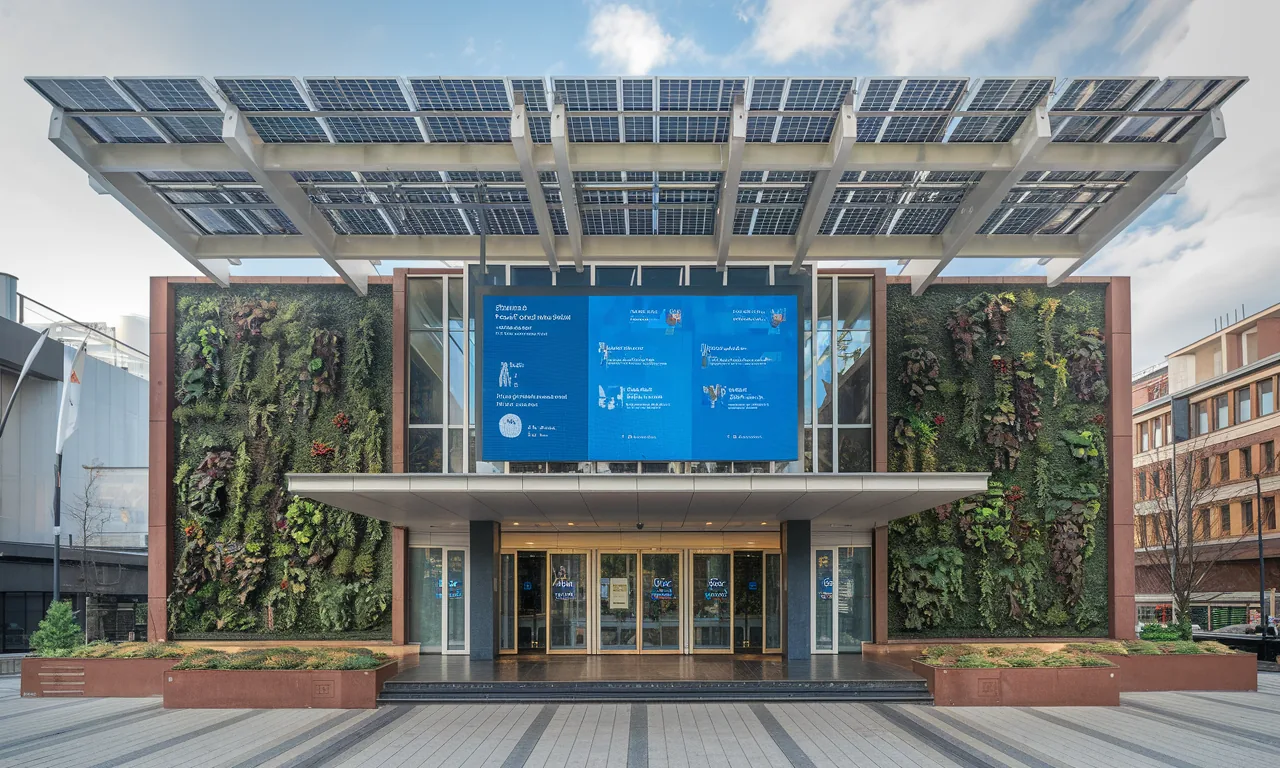
If Rosenheim links its Smart City development with climate goals, neighborhoods and municipal properties will likely become central levers: consumption can be measured there, facilities optimized, and renewable energies better integrated – provided technology, data protection, and operations are well organized.
For the coming years, the following building blocks are particularly plausible:
- Energy monitoring in municipal buildings to identify consumption patterns and prioritize measures.
- Demand-driven control of heating, ventilation, and cooling, based on usage, weather, and indoor climate.
- Neighborhood approaches (where sensible) that coordinate power generation, storage, and load management.
- Transparency for decision-makers through understandable dashboards (e.g., for energy indicators, CO₂-relevant indicators, and investment impacts).
To ensure that climate protection does not become a social issue, digital offerings and savings measures should be designed so that they also benefit households with lower financial means – for example, through clear communication, low-threshold advice, and prioritization of measures with high impact per euro invested.
Participation, Education, and Local Ecosystem: Smart City for Participation
Technology only becomes a Smart City if people can accept and use it. For Rosenheim, it will therefore likely be crucial in the coming years to anchor participation and digital education permanently – not just as a one-off campaign, but as a continuous process.
Effective are formats that create concrete benefits:
- Dialogue formats in which use cases are prioritized (e.g., "Which services should be digitized first?").
- Test phases in urban space where solutions are tried out on a smaller scale and then adjusted.
- Skills development in schools, clubs, and adult education so that digital offerings actually reach people.
- Transparent communication about which data is collected for what purpose – and which is not.
Especially with sensors and data platforms, transparency is a trust factor: those who can understand why data is collected and how it is protected are more likely to support digital changes.
Rosenheim in the Network of Smart Cities: Learning, Comparing, Shaping
Smart City development rarely works in isolation in practice. For Rosenheim, it may be helpful in the coming years to orient itself in municipal networks: approaches, reference architectures, and examples are shared there – from urban data platforms to maturity models.
Three areas that Rosenheim could particularly benefit from in the future:
- Maturity checks: to systematically identify strengths and gaps (e.g., in processes, data management, IT security, operating models).
- Urban data platforms: to bundle data sources in a controlled manner, clarify roles, and (where appropriate) enable open data.
- Digital twins: to simulate planning (e.g., traffic, climate effects, construction projects) before implementation in urban space.
The benefit of such approaches increases if Rosenheim determines early on which decisions should be improved by data (e.g., waste logistics, traffic control, building operations) and which data is really needed for this. This prevents "data collection without purpose" and facilitates data protection and security assessments.
Outlook: How Rosenheim Could Feel as a Smart City
If Rosenheim implements key components of a Smart City strategy step by step by 2035, the following changes could be particularly noticeable in everyday life:
- Less paper, fewer trips: More concerns could be handled digitally, supplemented by clear support offers for people who still need analog assistance.
- More reliability in mobility: Better information and data-driven planning could reduce waiting times and make transfers more predictable.
- More efficient waste management: Demand-driven routes could reduce overflows and avoid unnecessary trips.
- Measurable contribution to climate protection: Energy monitoring and optimized facility control could unlock savings potential in municipal buildings and neighborhoods.
- More participation: Digital participation could make it easier to contribute ideas and understand decisions.
For this development to be perceived as progress, two principles will remain decisive: Trust (through data protection, IT security, and transparency) and Usability (through clear language, low-barrier offerings, and reliable operation).