Experience Animal Parks, Zoos & Wildlife Enclosures in Rosenheim
Experience Animal Parks, Zoos & Wildlife Enclosures around Rosenheim: Animal Excursion Destinations for the Coming Weeks and Months
Rosenheim is a strong starting point for future day and weekend trips into Bavaria's animal world: large zoos and aquariums, wildlife parks with native species, as well as animal encounter locations in the city. This guide helps you plan your next visits responsibly – with a focus on animal welfare, transparency, and reliable preparation.
Overview: What you can easily reach from Rosenheim in the future
If you are planning animal experiences in the coming weeks or months, you typically have three directions to choose from starting from Rosenheim:
- Large zoos and aquariums (with educational programs, conservation communication, and often digital visit planning).
- Wildlife and animal parks (often focusing on native species, forest and nature experiences, sometimes with petting areas).
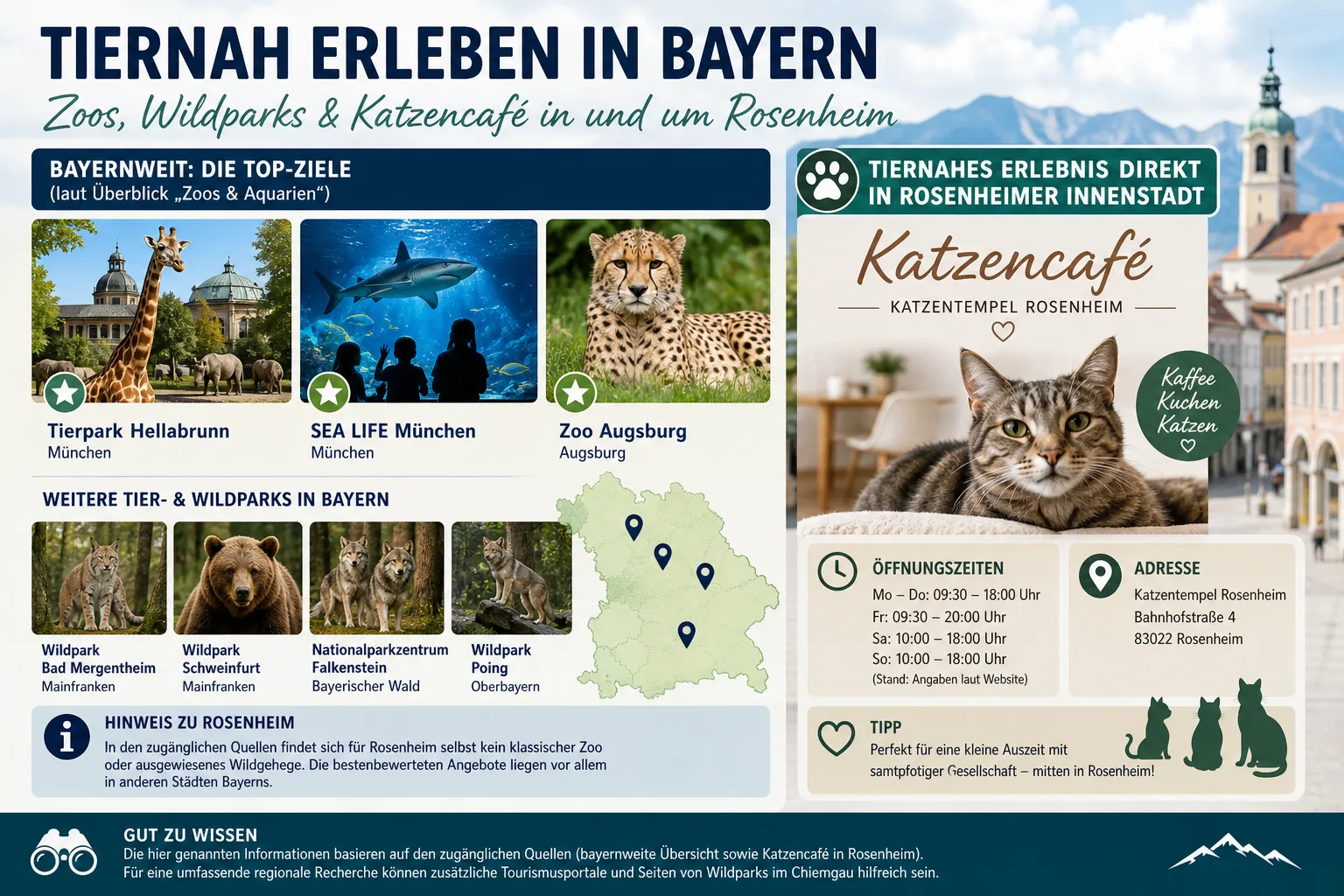
- Animal encounter locations in the city (e.g., cat cafés or similar concepts that allow animal contact in a calm setting).
For your future planning, a quick reality check is worthwhile: opening hours, ticket models, animal feeding times, and admission rules change seasonally at many facilities. Therefore, rely on the current information from the respective operators (website or official channels) for each upcoming visit.
Why Rosenheim is still a good starting point without a classic zoo
Even though Rosenheim itself is generally not considered the location of a large, classic zoo, this is more of an advantage than a disadvantage for your future excursion plans: you can flexibly choose between different concepts – from large zoological gardens to nature-oriented wildlife parks.
What this means in practice for your next excursions
- More choice by occasion: short animal contact in the city vs. a full-day trip to a large facility.
- More influence on animal welfare preferences: you can specifically select facilities based on how transparently they inform about husbandry, conservation, and education.
- Better seasonal planning: In warm months, nature-oriented parks are often attractive, in cooler times, facilities with indoor areas (aquariums, tropical houses, animal houses), if available, are worthwhile.
Animal encounters in the city: Cat café & similar concepts
For future, low-threshold animal encounters without a day trip, cat cafés or comparable concepts are interesting. The basic idea: guests visit a café where cats live and can move freely – with clear rules, retreat zones, and quiet areas for the animals.
How to recognize a reputable concept before your next visit
- Behavioral rules are visible and consistent: e.g., no lifting against the animals' will, respected retreat areas, quiet times.
- Limited number of guests or reservation system: reduces stress and noise (especially relevant if you plan a visit on the weekend).
- Transparency about animal care: information on health care, neutering/vaccination status, cooperation with animal welfare (if applicable), and care staff.
- Child-friendly instructions: clear rules for families so that children learn animal contact without harassing the animals.
For your planning: check in advance whether reservations are recommended and whether there are special time slots when the café is quieter (e.g., mornings during the week). This increases your chances of a relaxed atmosphere – for you and for the animals.
Reminder for your next visit: Good animal encounters feel calm – if you feel "program pressure," it's usually too crowded or too loud.
Planning excursions: How to choose the right destination in the future
If you are planning a zoo visit or a wildlife park excursion around Rosenheim in the coming months, these four questions will help you choose:
- What is your goal? (Learning & education, nature experience, animal observation, family outing, photography, barrier-free walk).
- Which animal species interest you? (native wildlife vs. exotic species; aquariums/terrariums vs. extensive outdoor enclosures).
- How much time do you have? (2–3 hours, half-day trip, whole day).
- How do you want to get there? (public transport, car, bicycle + public transport combination; with stroller or wheelchair).
Concrete planning steps for your next visit
- Check opening hours & seasonal info: Many facilities now have seasonal time slots or special regulations.
- Clarify tickets & admission rules: time slot tickets, online purchase, quotas on peak days.
- Select program: guided tours, commented feedings, themed trails (if offered) can structure your visit.
- Plan breaks: Especially with children, rest periods are crucial so that the excursion doesn't become "too much at once."
Animal welfare checklist for your next zoo visit
If you want to compare facilities in the future, pay attention to indicators that are often associated with animal welfare and good visitor information in practice. A single observation is never enough as a judgment – the combination of several points is more meaningful.
How to often recognize a well-managed facility
- Transparent animal and conservation information: understandable signage, comprehensible goals, clear distinction between education and entertainment.
- Retreat and quiet zones: animals can withdraw from view; visitor paths respect distance.
- Clean, structured facilities: water, ground, feeding areas, and barriers appear well-maintained and safe.
- Visitor guidance: instructions on noise levels, feeding bans, distances – and staff who enforce rules in a friendly manner.
- Comprehensible memberships/standards: references to recognized associations or standards (if applicable) are a plus, but do not replace your own assessment.
Plan your next excursion so that you don't have to "do everything." A calm, focused visit is usually more valuable – and reduces stress for animals and people.
Travel climate-friendly and remain considerate on site
For your upcoming excursions, the combination of good planning and small behavioral decisions is worthwhile:
- Check public transport: If bus/train are practical, you save searching for parking and reduce emissions.
- Choose off-peak times: A visit outside typical peak times is often quieter (better for animal observation and atmosphere).
- Move quietly, keep your distance: This improves your chances of seeing natural behavior.
- Respect feeding bans: Even "harmless" food can make animals sick or negatively influence behavior.
- Avoid waste: Reusable bottles, small snacks, take your trash with you – especially in nature-oriented parks.
This way, your next zoo or wildlife park visit will not only be more pleasant but also more responsible.